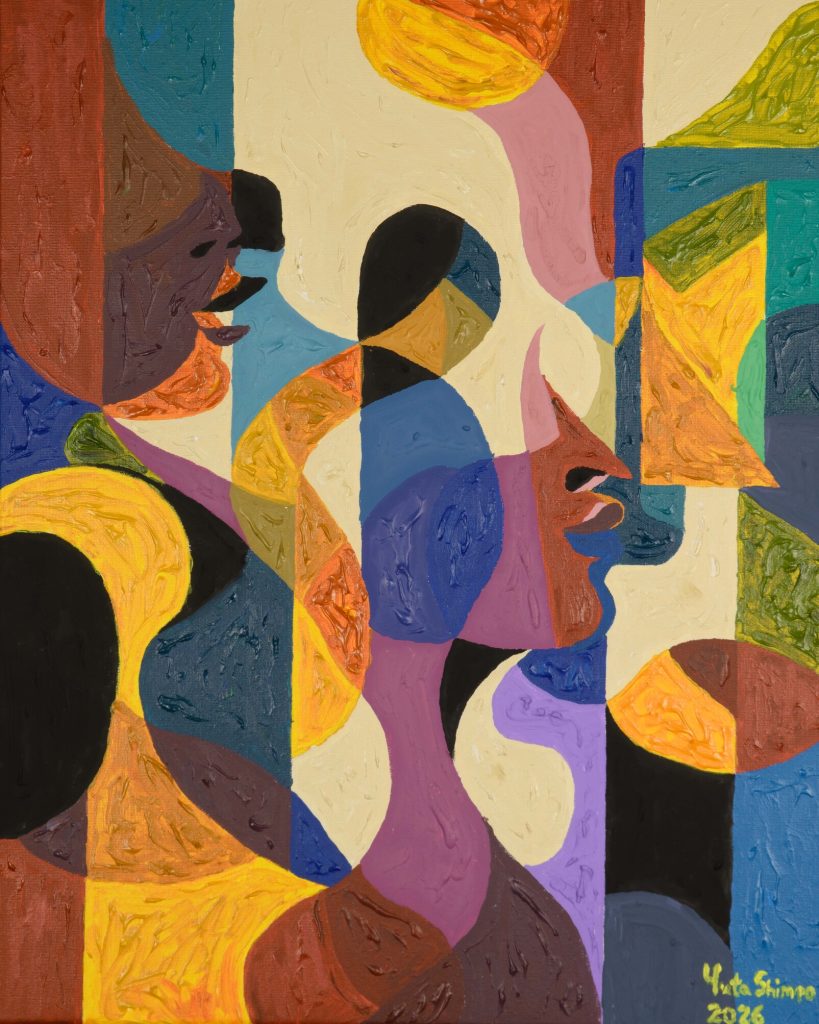
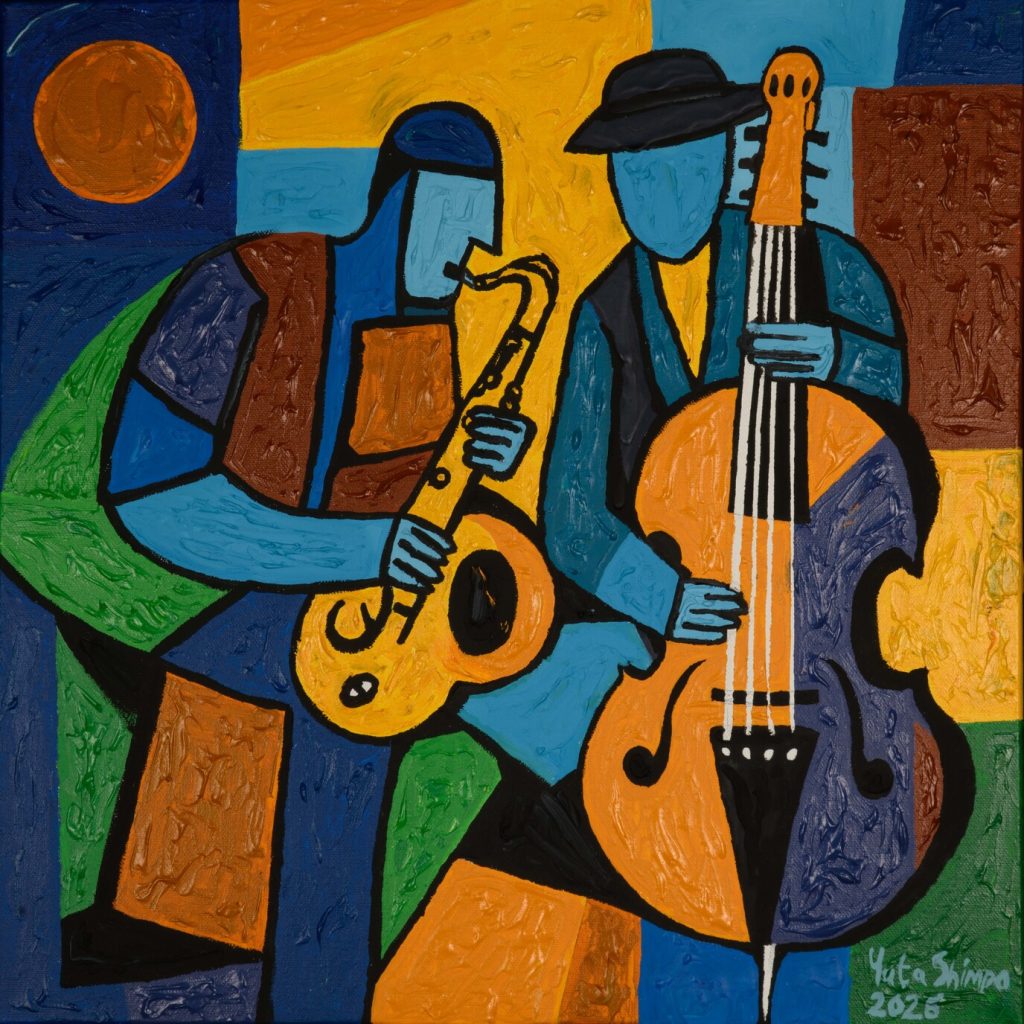
Japanese artist Yuta Shimpo is redefining his relationship with creativity. After eight years as a freelance digital concept artist, he has turned to acrylic painting, discovering a more personal and instinctive approach to art. Shaped by professional upheaval, personal challenges, and a renewed appreciation for creative expression, his journey explores what it means to be an artist beyond expectations, recognition, and financial success.
We spoke with Shimpo about the experiences that transformed his practice, the lessons he has learned, and why true artistic success begins with freedom.
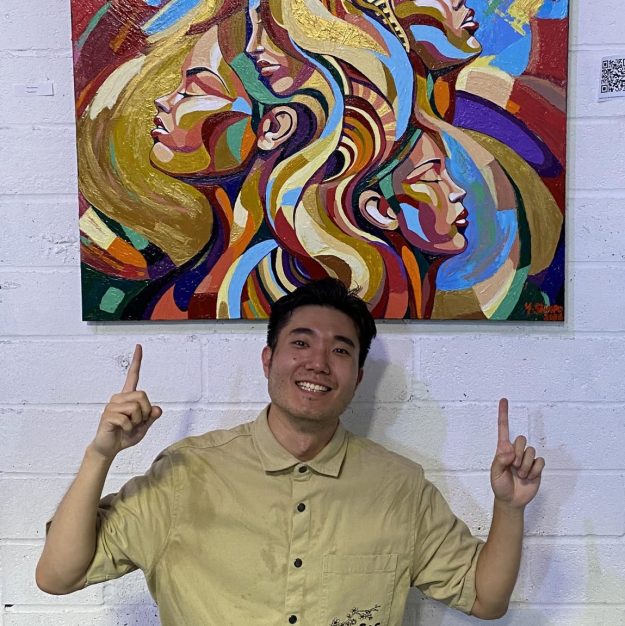
Shimpo’s artistic journey began early. Growing up surrounded by video games, trading cards, anime, manga, and toys, he developed a fascination with imaginative worlds and visual storytelling. He was equally drawn to drawing, dancing, and music, finding happiness in activities that allowed him to lose himself for hours. Around the age of eight, he decided he wanted to become a manga artist.“Creating made me happy, and I could focus for hours without getting bored,” he recalls.
That early sense of curiosity remains central to his identity. For Shimpo, being an artist extends beyond a single medium or profession. Had his path been different, he imagines combining work as a breakdance teacher, reiki therapist, and humanitarian aid worker. Whatever the alternative, independence would remain essential.
“I value freedom more than financial security,” he explains.
Before discovering acrylic painting, Shimpo spent eight years working as a freelance digital concept artist. Yet he believes people often underestimate the dedication behind artistic achievement, attributing his abilities to natural talent rather than years of practice.
He recalls a quote often attributed to Picasso: “It took me thirty years to do that, not ten minutes.” For Shimpo, the sentiment captures the invisible work behind every finished piece: the failures, abandoned projects, self-doubt, and financial risks that rarely feature in success stories. “They see the tip above the water and ignore the foundation below,” he says.His experience is a reminder that artistic development is rarely a straightforward upward journey. Persistence and experimentation matter just as much as talent.
The rise of artificial intelligence from 2022 onwards profoundly affected Shimpo’s relationship with digital art. As image generation became increasingly accessible, he watched friends in concept art and illustration lose their jobs and began questioning the future of his own profession.
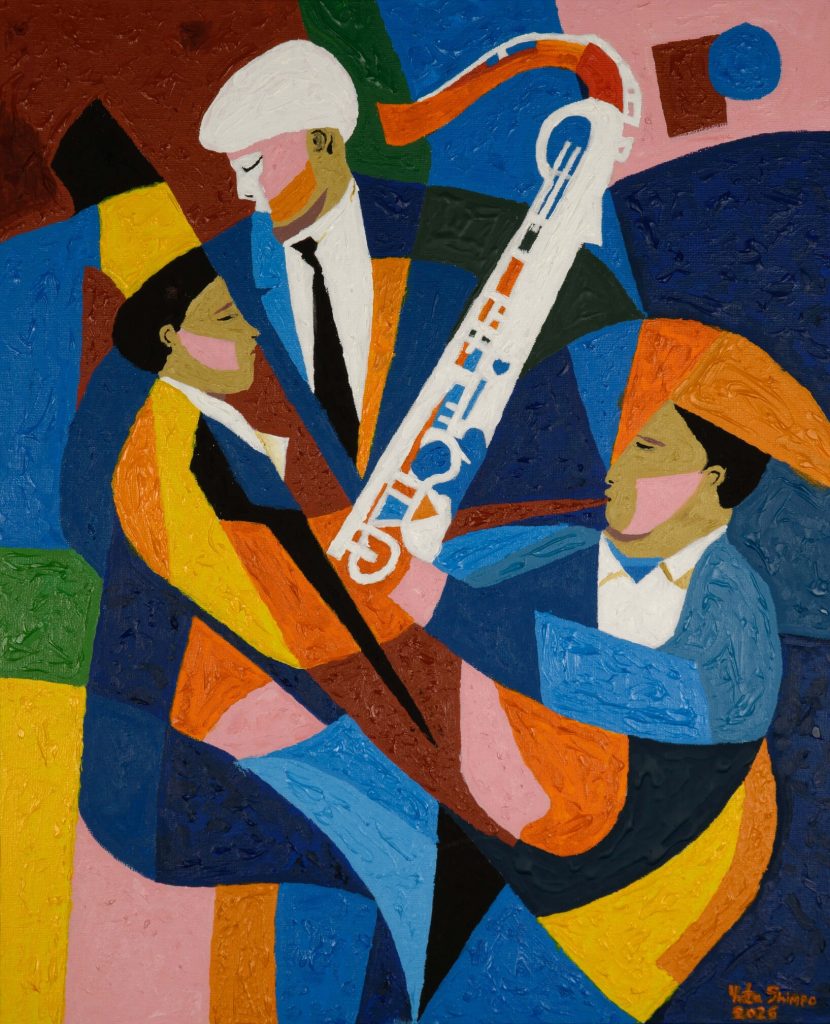
Having spent years mastering his craft, he struggled with what these changes meant for creativity and personal fulfilment. Then, in 2025, a difficult period in his personal life brought further upheaval, including the loss of his freelance concept art career in Japan.
While rebuilding his life in early 2026, he discovered his younger sister’s unused sketchbooks, canvases, and acrylic paints. He began painting spontaneously, without professional expectations or commercial objectives. The experience changed everything.“In a roundabout way, AI pushed me towards the work I’m most proud of,” he reflects.
Painting gave him a renewed sense of purpose, allowing him to create according to his feelings rather than external demands.
Although Shimpo now embraces spontaneity, his background in digital concept art continues to influence his approach. He begins with a vague idea, gathers visual references, and explores mood, colour, lighting, and composition. He now spends approximately 40 per cent of his time researching and 60 per cent painting, reversing the balance of his previous professional practice.
This shift reflects a deeper change: allowing the artwork to evolve naturally rather than planning every detail in advance. His process combines technical discipline with intuition, giving him the freedom to experiment while drawing on years of accumulated knowledge.
Shimpo’s understanding of art has also evolved. Once convinced that realism and technical mastery were the clearest measures of artistic ability, he admired painters such as Caravaggio, Rembrandt, Joaquín Sorolla, and John Singer Sargent.
He admits that he struggled to appreciate abstract and contemporary art, remembering a large blue painting at Tate Modern that left him bewildered. “I’m embarrassed by that now,” he says.
Only after beginning to paint himself did he appreciate the ideas, techniques, and sensory experiences behind different forms of artistic expression. He discovered that art could communicate through intuition, colour, and emotion without relying on realism.
“Now I try not to judge any work, because art is simply creative expression”
For Shimpo, overcoming self-doubt begins with recognising that every artist follows a different path. Comparing progress is rarely productive, particularly when creativity is an individual process rather than a competition.
“We’re not in a race. Art isn’t about winning; it’s expression, not a sport.”
Meditation, spending time in nature, and stepping away from art help him maintain perspective.
His definition of success is equally personal. Rather than pursuing wealth or fame, he values fulfilment, meaningful experiences, collaboration, and the opportunity to learn from others.
“Good or bad, every experience is a lesson.”
Shimpo hopes one day to exhibit at Tate Modern, a venue that represents a personal full circle after his changing understanding of contemporary art.
He has exhibited twice recently:
For Shimpo, this new chapter is about more than changing mediums. It represents a willingness to question assumptions, embrace uncertainty, and reconnect with the reasons he began creating in the first place.
His journey offers a compelling reminder that artistic growth does not always follow a predictable path. Sometimes, losing direction creates the space to discover something more meaningful.
For Yuta Shimpo, success lies in the freedom to keep exploring, learning, and expressing himself, one painting at a time.
Discover Yuta Shimpo here <